
Continuous reinforcement of governance
Basic approach and basic policies toward corporate governance
At the Noritake Group, every officer and employee inherits the founding spirit of our company, and, by observing and practicing the Noritake Group’s Code of Ethics formulated on the basis of that founding spirit, works toward ensuring that Noritake Group keeps to higher corporate ethics. In addition, by providing financial information and non-financial information through our website, we will strive to actively and fairly disclose information and heighten the transparency of our management.
The basic policies concerning our corporate governance are as follows.
Basic Policy
- (1) Strive to ensure the rights of shareholders and fairness.
- (2) Strive for appropriate cooperation with stakeholders other than shareholders (customers, suppliers, creditors, local communities, employees, etc.).
- (3) Strive to ensure appropriate information disclosure and transparency.
- (4) Strive to appropriately carry out the roles and responsibilities of the Board of Directors to enhance sustainable growth of the company and medium-to-long term corporate value.
- (5) Strive for constructive dialog with shareholders.
Corporate Governance System
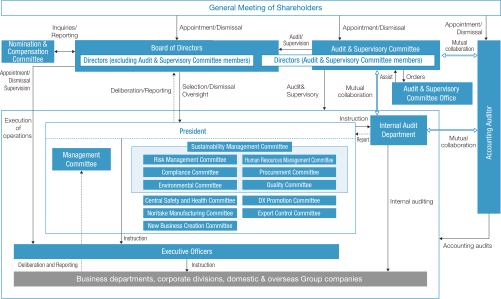
To further enhance governance, including strengthening the supervisory function of the Board of Directors and accelerating decision-making in management, we have chosen a company structure with an Audit & Supervisory Committee member and have established the system shown to the right.
Corporate Governance Structure (as of November 30, 2025)
Board of Directors
Members: 10 Directors(5 Directors from inside the company (including 1 female), 5 Directors (Outside) (including 3 women))
Chairman: Hiroshi Kato, Representative Director and Chairman
The Board of Directors generally convenes once a month, in principle, to make decisions on important matters including basic management policies and matters stipulated by laws and regulations, as well as to supervise the execution of operations. Based on the regulations and deliberation standards of the Board of Directors, resolutions are made regarding matters related to the General Meeting of Shareholders, personnel and organizational matters, financial reporting, and other issues. The Board of Directors also appoint two Directors (Outside) as part of a system to strengthen oversight functions and ensure transparency in decision-making. The Representative Director is appointed to make decisions for certain matters, who receives reports from the Representative Director and other Executive Directors to supervise the status of execution of operations.
In FY2024, the Board of Directors convened 13 times with a Director attendance rate of 100%.
Skills matrix and composition of the Board of Directors
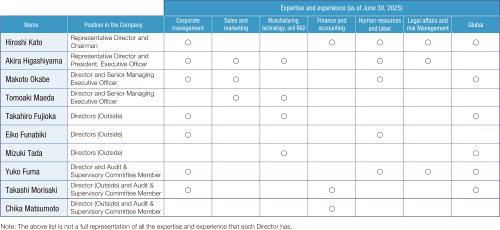
We believe it is important for our Board of Directors to be composed of Directors with diverse perspectives, diverse experiences, and diverse and advanced skills in order to oversee business execution and make important decisions.
By composing the Board of Directors with internal directors familiar with each business and Directors (Outside) with extensive experience and deep insight in various fields such as corporate management, R&D, finance, and accounting audits, we ensure balance and diversity in the Board’s knowledge, experience, and abilities.
Key topics of the Board of Directors
During FY2024, deliberations covered the following key issues.
Resolutions
- ● Approval of budget and financial results
- ● Forecast of operating results, amendment of expected dividend amounts
- ● Sale of investment securities
- ● Acquisition and cancellation of treasury stock
- ● Business restructuring through company split
- ● The 13th Three-Year Business Plan
- ● Review of materiality
- ● Introduction of annual performance-linked stock compensation system
Matters for Reporting
- ● Progress of the 12th Three-Year Business Plan
- ● Ownership of investment securities
- ● Results of Board of Directors effectiveness evaluation and action plan
- ● Status of dialogue with shareholders
- ● State of activities of the Sustainability Management Committee
- ● State of activities of each committee
Nomination & Compensation Committee
Members: 7 Directors(2 Representative Directors, 5 Directors (Outside))
We established the Nomination & Compensation Committee in order to ensure reasonable and transparent decision-making regarding Board of Directors membership and compensation. With independent Directors comprising a majority of its members, the committee serves as an advisory body to the Board of Directors and is generally held twice a year. Based on inquiries from the Board of Directors, the committee discusses personnel matters, assignments and compensation concerning Directors and Executive Officers, then reports to the Board of Directors on the results of its deliberations.
Key issues for the Nomination & Compensation Committee
During FY2024, deliberations covered the following key issues.
- ● Matters concerning appointment of Executive Officers and work entrusted to Executive Officers
- ● Matters concerning remuneration for Executive Officers such as performance-linked stock compensation
Audit & Supervisory Committee
Members: 3 Directors (1 Standing Audit and Supervisory Committee Member, 2 Audit & Supervisory Board Members (Outside))
The Audit and Supervisory Committee comprises three Audit & Supervisory Board Members (of which 2 are Audit & Supervisory Board Members (Outside)), and audits and monitors the status of execution of duties by Directors. The Audit and Supervisory Committee selects a full-time committee member to ensure effective auditing and monitoring functions by collecting information on a daily basis and by working for smooth coordination between the Accounting Auditors and Internal Audit Department.
Management Committee
Members: 8 Directors
Directors and Executive Officers designated by the President
Regarding key matters for management that involve prosecution of work, we conduct full deliberations in a Management committee, convened once a week regularly and composed of Directors and Executive Officers designated by the Representative Director & President and approved by the Board of Directors, as part of a system for appropriate and prompt management decision-making.
Evaluations of the effectiveness of Board of Directors
The Company performs evaluations of the effectiveness of the Board of Directors for the purpose of heightening its effectiveness and increasing corporate value. At the end of each fiscal year, a survey of the Directors is conducted, and the results are analyzed and evaluated by an external organization before being reported to the Board of Directors.
Methodology of the fiscal 2024 effectiveness evaluation and summary of evaluation results
In fiscal 2024, a questionnaire survey was administered to the Board of Directors and Audit & Supervisory Board regarding their evaluation of Board of Directors composition and operation, management and business strategies, corporate ethics and risk management, business performance monitoring, managerial evaluation/compensation, and dialog with shareholders. In addition to the questionnaire, interviews were conducted with non-executive directors. The analysis and evaluation results of the effectiveness of the Board of Directors are as follows.
- ● The Board of Directors is appropriately structured with diversity-ensured members who have required knowledge and abilities to fulfill its roles and functions.
- ● Agenda items for the Board of Directors meetings are selected appropriately for the Board of Directors meeting to fulfill its roles and functions.
- ● The distributed materials are designed to use clear expressions and make key points easy to understand, while also ensuring sufficient consideration is given to the amount of materials, as well as the timing of prior distribution and explanations.
- ● Every year, based on the results of the Board of Directors’ evaluation of the effectiveness, the company considers improvement measures aimed at enhancing the effectiveness of the board and prioritize our initiatives accordingly.
- ● Various information deemed necessary and sufficient for the deliberations of the Board of Directors is provided.
- ● With the requirements for disclosure of non-financial information related to sustainability and human capital, the company is consciously working to address these issues compared to the previous year.
- ● The company promotes examination for various risks, and has established a risk management framework.
Based on the above, we confirm that the Company’s Board of Directors is operating as designed and that its effectiveness has been demonstrated.
Response to the issues identified in the fiscal 2023 effectiveness evaluation
Our initiatives we have been addressing in response to the matters tabled during the fiscal 2023 effectiveness evaluation were reported as follows:
- ● Review of the business portfolio based on the cost of capital
The progress of the Medium-Term Management Plan and the changes in the business portfolio, along with the changes in the return on invested capital (ROIC) adopted and launched benchmarking as a means to achieve our target of 9% ROE were reported on a regular basis to the Board of Directors and were intensively discussed. - ● Long-term strategic investment in human capital and implementation of human resource strategies
The progress of our initiatives we have addressed to satisfy the human resource portfolio in line with our business strategy, including the establishment of competency evaluation methods, were reported on a regular basis to the Board of Directors. In addition, an Engagement Survey was conducted, and its utilization for assignment settings and policy planning was commenced. - ● Strengthening of Risk Management
We have been addressing establishment of and initiatives toward a system to work on the risks identified as highly risky based on our analysis and the result of evaluation on the risks surrounding the Noritake Group conducted at the Risk Management Committee newly established in April 2024, and reported on its progress to the Board of Directors. - ● Utilization of the dialogue with the shareholders for improving corporate value
We reported on a regular basis the status of the dialogues at the site of announcements of financial results or IR individual interviews.
Efforts to further improve effectiveness in fiscal 2025
In addition, the ongoing themes identified in the questionnaire and interviews as paths to improving the effectiveness of the Board of Directors—“Long-term strategic investment in human capital and implementation of human resource strategies,” “Strengthening of Risk Management,” “Utilization of the dialogue with shareholders for enhancing corporate value,”—were joined by new issues, “Sustainable improvement of corporate value by DX promotion,” and “Compliance, monitoring and supervision of corporate ethics.” We will continue to work on maintaining and improving the effectiveness of the Board of Directors by addressing these issues.
Status of Directors (Outside)
Noritake has five Directors (Outside), of which two are Audit & Supervisory Committee members.
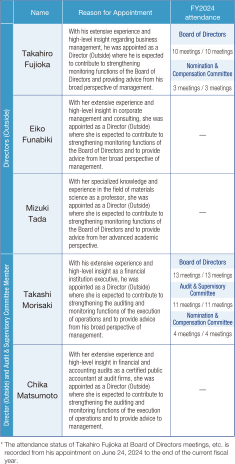
Directors (Outside) (excluding Directors who are Audit & Supervisory Committee members) Takahiro Fujioka, Eiko Funabiki, Mizuki Tada, and Directors (Outside) Takashi Morisaki and Chika Matsumoto who are Audit and Supervisory Committee have no personal, capital, or business relationships or other conflicts of interest with our company.
While Noritake does not have any particular standards or policies concerning independence for the selection of Directors (Outside) (excluding Directors who are Audit & Supervisory Committee members) and Directors who are Audit & Supervisory Committee members, they are expected to fulfill their functions and roles of providing objective and appropriate audits and supervision based on their expertise and insight, and are appointed based on the underlying policy that there is no possibility of a conflict of interest with general shareholders.
Reason for Appointment and Attendance Rate
Policies concerning the determination of compensation
The decision-making policies for individual compensation of Directors (excluding Directors who are Audit and Supervisory Committee members) are as follows. These policies were partially revised by a resolution of the Board of Directors held on May 30, 2025. The content of the revised decision policy is as follows.
To decide on individual compensation for Directors (excluding Directors who are Audit and Supervisory Committee members), these matters are deliberated at the Nomination and Compensation Committee comprising a majority of Independent Directors, with the findings reported to the Board of Directors to make a decision.
1) Policies concerning fixed monthly compensation
Compensation for Directors (excluding Directors who are Audit and Supervisory Committee members) is composed of “fixed monthly compensation,” “annual performance-linked stock compensation.” and “retirement performance-linked stock compensation.” “Fixed monthly compensation” is determined by the Board of Directors within the scope approved by the Shareholders Meeting. Reasonable and transparent decision-making is ensured by a process in which the Nomination and Compensation Committee deliberates and reports its findings to the Board of Directors regarding the appropriateness of compensation amounts for each Directorship position as appropriate to its roles and duties in keeping with the basic policies pertinent to the compensation system.
Compensation for Directors (Outside) (excluding Directors who are Audit and Supervisory Committee members) is only “fixed monthly compensation,” taking into account their role in supervising management from an independent standpoint.
Compensation for Directors who are Audit and Supervisory Committee members is only “fixed monthly compensation,” which is decided within the scope approved by the Shareholders based on deliberation by Directors who are Audit and Supervisory Committee members.
2) Policies concerning annual performance-linked stock compensation
“Annual performance-linked stock compensation” is provided to Directors (excluding Directors who are Audit and Supervisory Committee members and Directors (Outside)) based on stock compensation regulations to promote early stock ownership and provide incentives for management that takes into account medium-to-long term improvement in corporate value and shareholder value.
For each business year, points are awarded based on the achievement of corporate Operating Performance targets (ROIC, non-financial indicators such as human capital and environmental indicators, etc.), and each year, Company stock is granted in proportion to the points awarded, along with a cash payment equivalent to the value of the Company stock.
Furthermore, the compensation level is set at 100% corresponding to the achievement level of corporate operating performance targets (ROIC, non-financial indicators (human capital-related, environmental indicators), etc.) set as the standard, and fluctuates within the range of 90% to 150%.
3) Policies concerning retirement performance-linked stock compensation
“Retirement performance-linked stock compensation” is provided to Directors (excluding Directors who are Audit and Supervisory Committee members and Directors (Outside)) based on stock compensation regulations to provide incentives for management that take into account medium-to long-term improvement in corporate value and shareholder value.
Points are awarded based on the achievement of corporate performance targets set for each business year in line with the Three-Year Business Plan (consolidated sales, consolidated operating profit, etc.). Directors are granted Company stock in proportion to the points they hold at the time of retirement, and at the time of retirement, receive a cash payment equivalent to the value of their Company stock.
Furthermore, the compensation level is set at 100% corresponding to the achievement level of corporate operating performance targets (consolidated Net Sales, consolidated Operating Profit, etc.) set as the standard, and fluctuates within the range of 0% to 150%.
4) Policy on the Ratio of Compensation, etc.
Regarding the ratio of fixed monthly compensation, annual performance-linked stock compensation, and retirement performance- linked stock compensation, we emphasize stable mid-to-long term operating performance and the enhancement of corporate and shareholder value, and set the ratio so that the proportion of performance-linked stock compensation does not become excessive.
When determining the content of individual compensation, etc. for Directors for the current fiscal year, the Nomination & Compensation Committee, which consists of a majority of independent Directors (Outside), conducts a multifaceted review of the draft, including consistency with the decision policy prior to the revision by the Board of Directors resolution held on May 30, 2025. The Board of Directors respects the committee’s recommendations and judges that the decisions are in line with the policy.
Regarding the indicators for performance-linked compensation, the annual performance-linked stock compensation uses ROIC until the fiscal year ending March 31, 2025, and the compensation level corresponding to the achievement of indicators for performance-linked compensation in the current fiscal year was 120%. In addition, the indicators for retirement performance-linked stock compensation are consolidated net sales and consolidated operating profit, etc. In the current fiscal year, consolidated net sales were 138.2 billion yen, consolidated operating profit was 10.2 billion yen, etc., and the compensation level corresponding to the achievement was 75%. Our company has set the corporate operating performance targets for the final year of the 12th Three-Year Business Plan (FY2022 to FY2024) as consolidated Net Sales of 147.0 billion yen and consolidated operating profit of 13.0 billion yen, etc.
●Clawback System, etc.
Regarding annual performance-linked stock compensation, if serious fraud or violations occur by Directors, etc., the right to receive delivery of company shares, etc. may be lost or forfeited (malus), and a claim for the return of money equivalent to already delivered company shares, etc. (clawback) may be made against the relevant Directors, etc.
Total amount of compensation by officer category, total amount by type of compensation, and number of officers eligible (Fiscal 2024)
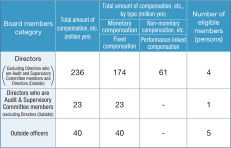
- (Note) 1.Remuneration, etc. for outside officers includes one director who retired at the conclusion of the General Meeting of Shareholders held on June 24, 2024.
- (Note) 2.The amount of performance-linked stock compensation is the amount of the provision for officer stock benefit recorded as an expense in the fiscal year ending March 2025.
Training for board members
When we appoint Internal Directors, we conduct appropriate explanations about their legal duties and responsibilities to be observed and make use of external training bodies as necessary. We also offer seminars to the members, to acquire higher skills and new knowledge required for them to perform better. In addition, we regularly conduct in-house training for Officers, and in FY2024, we held four sessions on themes such as human capital management and human rights in business.
For External Directors, we also create individual opportunities to provide them with information about our Group management strategy, the content of our business and work, financial information, and more. In addition, they deepen their understanding of the Group through factory tours and regular interviews with internal officers.
Internal Control
We conduct reviews of our structures to ensure the properness of duties in accordance with revisions to laws and the current state of our Group, and our current Basic Principles on Internal Control Systems were revised through resolution by the Board of Directors on June 23, 2023.
The Internal Audit Division governs internal control regulations for financial reporting, and performs continuous monitoring of work procedures to ensure the reliability of financial reporting. We have also established internal auditing regulations and conduct work audits involving the legal compliance of the business activities of our business divisions and Group companies. Key matters discovered through these initiatives are reported to the Board of Directors or the Management Committee.
Communication with shareholders and investors
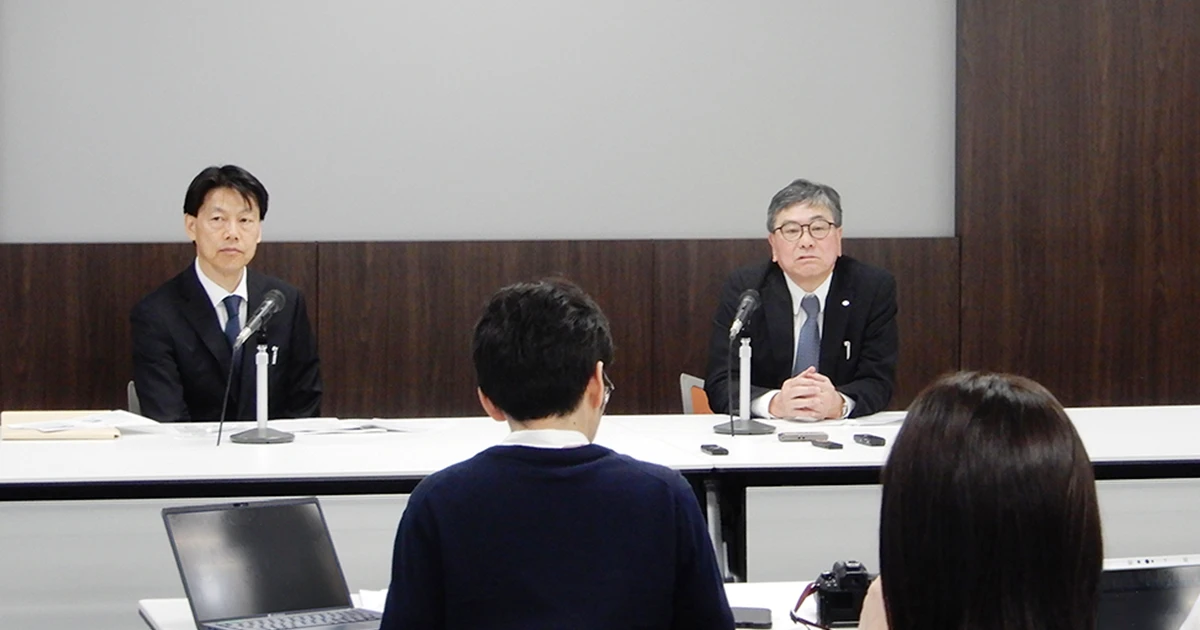
We hold the General Meeting of Shareholders at the Noritake headquarters in Nagoya City every year in late June. In June 2025, 39 shareholders attended the 144th Annual General Meeting of Shareholders and provided open opinions.
In addition, after the announcement of these financial results and the second quarter results, we ordinarily hold a financial results briefing for securities analysts.
Additionally, we are continually improving the website so that shareholders and investors can easily obtain various types of information such as business reports and financial results announcements.
Strengthening of risk management
Uncertainty surrounding the impact of global climate change, complex political and economic conditions, and shifting market needs on business continues to increase. The Noritake Group accurately grasps such changes and actively promotes risk management.
Strengthening of Management structure for risk management
In April 2024, under the Sustainability Management Committee chaired by the President, we newly established the Risk Management Committee, consisting of Executive Officers and others as members. The Committee meets twice a year to make decisions on risk management measures, monitor progress, and provide instructions to relevant departments and committees.
Identification and response to key risks
At our company, we create a “Risk Map” based on the evaluation and analysis of various risks, clarifying particularly significant risks. For significant risks for which exisiting Comitties are already responsible, each Committee takes the lead in implementing specialized and appropriate responses. On the other hand, for risks that are not under any Committees, we establish working teams to build a system that can respond quickly and flexibly.
Through these initiatives, the Noritake Group aims to reduce risks, maximize profit opportunities, and achieve sustainable growth and enhancement of corporate value.
Disaster readiness and disaster mitigation initiatives
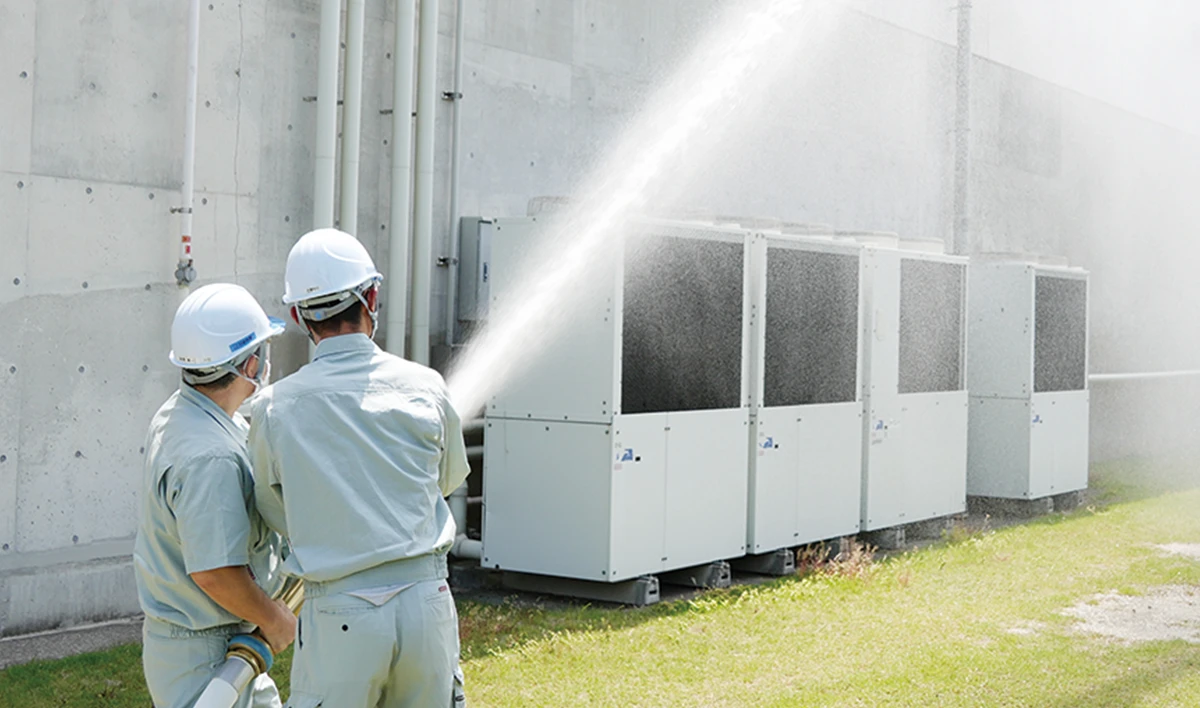
Disaster Prevention Committee meetings are held twice every year companywide, evacuation drills and confirmation of emergency contact networks are regularly conducted in preparation for the occurrence of a large-scale disaster at each business site.
Business groups and business sites have also started developing and formulating business continuity plans (BCPs).
Strengthening of information security
With regard to the protection of personal information and other information assets, we have information security management rules in order to eliminate risks and safely carry out business activities. These rules indicate a code of conduct concerning information security for all officers and employees. We create and employ countermeasure standards and implementation manuals based on this code.
In addition, under the responsible executive officer, we have established a promotion department and are working to strengthen security. To prepare for unauthorized access and cyberattacks, we are implementing integrated network security, strict ID management, multi-factor authentication, device authentication, vulnerability countermeasures, PC operation log acquisition, and training to respond to targeted emails.
Policies for the protection of personal information
The Noritake Group fully recognizes the importance of the protection of personal information. We comply with Japan’s Act on the Protection of Personal Information and heed the laws of other countries as well, and properly manage the personal information provided by customers.
Ensure commitment to compliance
The Noritake Group has established the Noritake Group’s Code of Ethics, setting forth Ethics Standards to be observed in the execution of duties, ensuring thorough awareness among all officers and employees, and working to strengthen compliance and implement preventive measures.
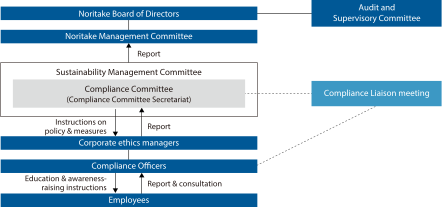
Under the Sustainability Management Committee, we have established a Compliance Committee and its subordinate body Compliance Liaison Meeting. The members of the Compliance Committee are directors in charge of business departments, corporate departments, and main Group companies, as well as legal counsel.
Officers serve as corporate ethics managers, and department heads act as compliance officers, systematically and continuously promoting Compliance activities. The Compliance Committee meets twice a year to decide on compliance measures and check their progress, while the Compliance Liaison Meeting assembles quarterly to share challenges related to compliance promotion, develop measures to prevent compliance violations, and implement various initiatives.
In fiscal 2024, we expanded compliance education through training by level, training by purpose, and training for overseas assignees, and also conducted
a compliance awareness survey. The survey results are used to formulate and implement strategies to further enhance awareness. Furthermore, we continue to raise awareness by providing clear explanations with examples of laws and regulations related to daily operations through the Noritake Group’s internal newsletter and intranet distribution.
Promotion structure diagram
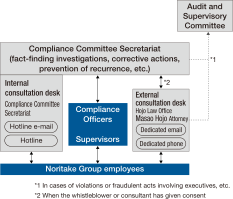
Preparation of an internal reporting system
The Noritake Group has established internal and external points of contact where employees can directly consult or report any compliance violations or suspected misconduct, without having to go through their managers. A total of 20 reports were made during fiscal 2024.
Noritake Group reporting and consultation route
Initiatives to prevent corruption
The Noritake Group’s Code of Ethics sets forth ethical standards for the prosecution of work and the observance of laws and ordinances concerning the prevention of bribery and other improprieties, and we ensure that these standards are known among employees.